Installation
Sweet Home 3D may be run under Windows 98 to Windows 11, Mac OS X 10.4 (Tiger) to macOS 14 (Sonoma), various Linux systems and Solaris. Your computer should have at least a processor running at 400 MHz, 256 MB and a graphic card with its driver updated (it runs slowly but successfully on an iMac DV).
Note that Sweet Home 3D offline installer doesn’t run under Windows 98 (SP1 or SP2). Under that system, you can install Sweet Home 3D only with Java Web Start, meaning you must install Java first, then click on the link Launch Sweet Home 3D with Java Web Start.
Thanks to the services provided by sourceforge.net and Space Mushrooms, you can use Sweet Home 3D free of charge, for personal or commercial purpose, under the terms of the GNU General Public License, whereas you use its installer version or the Online version. Nevertheless, if you want to reward financially Sweet Home 3D project, you can donate the amount of your choice. You can also buy and download Sweet Home 3D on the Microsoft Store for Windows, on the Mac App Store for macOS, on Google Play for Android and on Apple’s App Store for iOS.
Downloading the store version of Sweet Home 3D offers several significant advantages.
Compared to the SourceForge version, the store version includes over 10,000 3D models and 400 textures already integrated, giving you immediate access to a vast library of design resources.
Additionally, in respect to the online version, the store version not only provides the same extensive collection of 3D models and textures, but it also allows you to import plug-ins to add functionalities.
If you used the free version, download it from the download page. If you acquired Sweet Home 3D on Amazon, go to the page Your digital games and software, where you’ll be able to download the version 7.0.3 once you signed in. If you acquired it on the Microsoft Store, click on this link to display Sweet Home 3D page in Microsoft Store application, connect yourself by clicking on the Profile icon at top right then click on the Install button. Under macOS, if you acquired it on the Mac App Store, launch App Store application, connect yourself with Store > Sign in menu item and select the Store > Purchased or View My Account menu item to install Sweet Home 3D.
Under macOS, click on the icon of the SweetHome3D.jnlp file while maintaining the ctrl key pressed, and choose Open in the contextual menu that will appear (by default you should find it in the Download folder of your home folder). Under Windows and Linux, this is probably because Java isn’t installed correctly or isn’t installed at all on your system. If you don’t mind to download a bigger file (40 to 50 MB instead of 20 MB), the easiest way to fix this problem is to download Sweet Home 3D offline installer bundled with Java and to follow installation instructions.
Otherwise, under Windows, you should install or reinstall Java available at https://java.com, then click again on the link Launch Sweet Home 3D with Java Web Start. Under Linux, you must also indicate to your browser that it should open the JNLP file with the command javaws that you’ll find in the bin subdirectory of the directory where Java is installed (search something named jre...).
This is a problem due to the configuration of your graphic card. Please read the answer to the next question.
This is a problem due to the configuration of your graphic card.
- Under Windows:
- First, if you use Windows 7 or a previous version of Windows, open the Display Properties pane by right clicking on desktop screen and choosing Properties item in menu. In that pane, display the Settings tab, and click on the Advanced button. Then in the Troubleshoot tab of the pane that opened, check the Hardware acceleration cursor is at its maximum on Full, confirm your choice and try to run Sweet Home 3D again.
- If the previous operation didn’t resolve your problem, update the OpenGL and DirectX drivers of your graphic card with the latest available ones, and try to run Sweet Home 3D again.
- If this update still doesn’t fix your problem and you use a 64 bit system, relaunch the installation program of Sweet Home 3D and select the 32 bit architecture option in the screen used to choose the installation folder (32 bit drivers are sometimes more stable than their 64 bit counterpart).
- If running Sweet Home 3D in 32 bit still doesn’t work, download the file
SweetHome3D.l4j.ini, copy it in Sweet Home 3D installation folder (by default,C:\Program Files\Sweet Home 3DorC:\Program Files (x86)\Sweet Home 3D) and relaunch Sweet Home 3D. The fileSweetHome3D.l4j.initells Sweet Home 3D to use the DirectX version of the Java 3D library rather than the OpenGL version, but this option is available only in 32 bit (if you installed a JRE 32 bit, you may also click on this link to run Sweet Home 3D with Java Web Start and the DirectX version of the Java 3D library). - Finally, if this last solution doesn’t work, you may still want to use Sweet Home 3D without 3D features, by reading the answer to the next question.
- Under Linux:
- Update the drivers of your graphic card with the latest available ones, and try to run Sweet Home 3D again.
- Try to run the script
SweetHome3D-Java3D-1_5_2which is available in the Linux installer and runs with an older version of Java 3D. - If this solution doesn’t work, you may still want to use Sweet Home 3D without 3D features, by reading the answer to the next question.
Since version 3.2, you may disable at Sweet Home 3D launch the features that needs the 3D capabilities of your computer. Thus, you get Sweet Home 2D application which runs without any 3D view, without a 3D view menu, without the capability to render photos, create videos and import individual pieces of furniture; but you can still draw and layout furniture in the 2D plan without problems, SH3D files created with this version are compatible with Sweet Home 3D ones and you can import furniture libraries.
To install and run Sweet Home 2D with Java Web Start, install Java and click on this link (Sweet Home 3D and Sweet Home 2D may be installed on the same computer if needed). You may also run Sweet Home 2D by downloading the Jar executable version of Sweet Home 3D and executing the java -Dcom.eteks.sweethome3d.no3D=true -jar path/to/SweetHome3D-7.5.jar command.
This issue happens mostly on a few Linux computers when Sweet Home 3D checks whether computing offscreen 3D images is supported by Java 3D on your computer. This feature is required to compute the top view of furniture in the plan, to print the 3D view and to manage the two lowest photo and video quality levels. If Sweet Home 3D detects offscreen 3D images aren’t supported by your system, it automatically disables the features based on it, but sometimes, the detection test itself makes Sweet Home 3D crash! To launch a version of Sweet Home 3D which avoids this test and disables the features depending on offscreen 3D images, add the Java option -Dcom.eteks.sweethome3d.j3d.checkOffScreenSupport=false to the java command in Linux SweetHome3D script, or click on this Java Web Start link.
You probably use a recent computer with a HiDPI or high resolution screen, under Windows or Linux. If you run Sweet Home 3D with Java Web Start, using the HiDPI Java Web Start version should fix this issue. If you use the installer version under Windows, update to version 6.0 which fixes this issue. For older versions, create a text file named SweetHome3D.l4j.ini in the same folder as SweetHome3D.exe, copy/paste the following Java options in that file, and restart Sweet Home 3D (you may also download SweetHome3D.l4j.ini file and move it in SweetHome3D.exe folder). Under Linux, edit SweetHome3D script and add the previous options before -classpath Java option without line returns.
-Dcom.eteks.sweethome3d.resolutionScale=2.5
-Dswing.defaultlaf=javax.swing.plaf.metal.MetalLookAndFeel
-Dswing.plaf.metal.controlFont=Dialog-11
-Dswing.plaf.metal.userFont=SansSerif-11
-Dswing.plaf.metal.systemFont=SansSerif-11Sweet Home 3D can’t use as much as memory as your computer can offer by itself, but you can still change the maximum memory used by the program if needed. This may be required for example if an error red cross appears during the photo rendering of a home with many different and detailled 3D models. By default, the Java Web Start version uses 640 MB or 2 GB at maximum according to your system, and the installer version uses 1 GB or 2 GB at maximum, except under 32-bit Windows where it’s still 640 MB (this maximum is displayed in the About dialog box). For the installer version, you can change this number by udpating the value of the -Xmx Java option, as follows:
- Under Windows, create a text file named
SweetHome3D.l4j.iniin the same folder asSweetHome3D.exe, write the maximum memory Java option in that file, for example-Xmx700mfor 700 MB, then relaunch Sweet Home 3D. For a value higher than 700 MB, tested as the highest value under which Sweet Home 3D can run safely on a 32-bit Windows computer with little RAM, you should use a computer running 64-bit Windows and install Sweet Home 3D 4.3 or higher. - With the free version running with Apple Java 1.6 under macOS (see About dialog box in Sweet Home 3D), click on the application icon of Sweet Home 3D while maintaining the ctrl key pressed to display its contextual menu, choose Show Package Contents item, open the Contents folder, edit the Info.plist file by dragging its icon on TextEdit application and update the maximum memory in the text
<string>-Xmx1024m</string>, writing for example<string>-Xmx2g</string>for 2 GB instead of 1024 MB. Finally, save the file and relaunch Sweet Home 3D. If Info.plist is protected, you may run a command likesudo nano /Applications/Sweet\ Home\ 3D.app/Contents/Info.plistin a Terminal window to edit it (this command requires to enter the password of the administrator of the Mac). - With the Mac App Store version or the free version running with Java 1.8 under macOS, edit the SweetHome3D.cfg file found in the Contents/Java subfolder of Sweet Home 3D application and update the maximum memory by adding the option
-Xmxafter the line[JVMUserOptions], writing for example-Xmx6gfor 6 GB. Save the file and relaunch Sweet Home 3D. To edit the SweetHome3D.cfg protected file, you may run a command likesudo nano /Applications/Sweet\ Home\ 3D.app/Contents/Java/SweetHome3D.cfgin a Terminal window (this command requires to enter the password of the administrator of the Mac). - With the Mac App Store version or the free version running with Java 15 under macOS, edit the SweetHome3D.cfg file found in the Contents/app subfolder of Sweet Home 3D application and update the maximum memory by adding or modifying the option
-Xmxafter the line[JavaOptions], writing for examplejava-options=-Xmx6gfor 6 GB. Save the file and relaunch Sweet Home 3D. To edit the SweetHome3D.cfg protected file, you may run a command likesudo nano /Applications/Sweet\ Home\ 3D.app/Contents/app/SweetHome3D.cfgin a Terminal window (this command requires to enter the password of the administrator of the Mac). - Under Linux, edit
SweetHome3Dscript, update the maximum memory in the option-Xmx1024m(using for example-Xmx2gfor 2 GB), save the script, then relaunch Sweet Home 3D.
You can use the SweetHome3DIcon.png image proposed in the installer or the ones proposed in this article.
Choose your language in the Language drop down list of the Preferences pane. Under macOS, this pane is displayed by choosing the Preferences item in the Sweet Home 3D menu. Under other systems, it’s displayed by choosing the Preferences item in the File menu.
The installers of older versions of Sweet Home 3D are available in the Files section of the project on SourceForge.net.
If you want to run older versions of Sweet Home 3D with Java Web Start, click on this link to run version 1.8 or this link to run version 0.10 (Sweet Home 3D version 0.10 is the study case of the French book Les cahiers du programmeur Swing, written by Emmanuel Puybaret and published by Editions Eyrolles in December 2006).
- To uninstall Sweet Home 3D, follow these steps depending on your system:
- Under Windows Vista / 7 / 8 / 10, select Programs and Features in Windows Control Panel, select Sweet Home 3D in the programs list then click on the Uninstall button.
- Under Windows XP and previous versions of Windows, select Add or Remove Programs in Windows Control Panel, select Sweet Home 3D in the programs list then click on the Remove button.
- Under macOS, move the icon of Sweet Home 3D application in the trash. If you installed Sweet Home 3D with Java Web Start, you may also empty the Java cache used by the program by running javaws -viewer command in a Terminal window, then removing Sweet Home 3D from Java Web Start applications list.
- Under Linux, if you installed Sweet Home 3D with its installation program, move its application folder in the trash. If you installed Sweet Home 3D with Java Web Start, run javaws -viewer command in a Terminal window, then remove Sweet Home 3D from Java Web Start applications list.
- Sweet Home 3D saves also some data in files and folders separated from the program ones, to avoid losing them when you update the software. For your information, here are the places where you can find this data when it exists:
- Under Windows Vista / 7 / 8 / 10, imported furniture, textures, plug-ins and user preferences are saved in the
C:\Users\user\AppData\Roaming\eTeks\Sweet Home 3Dfolder and its subfolders ; user preferences handled with version 2.6 and previous versions are saved in theHKEY_CURRENT_USER\Software\JavaSoft\Prefs\com\eteks\sweethome3dfolder of Windows registry. - Under Windows XP and previous versions of Windows, imported furniture, textures, plug-ins and user preferences are saved in the
C:\Documents and Settings\user\Application Data\eTeks\Sweet Home 3Dfolder and its subfolders ; user preferences handled with version 2.6 and previous versions are saved in theHKEY_CURRENT_USER\Software\JavaSoft\Prefs\com\eteks\sweethome3dfolder of Windows registry. - Under macOS, imported furniture, textures, plug-ins and user preferences are saved in the
Library/Application Support/eTeks/Sweet Home 3Dsubfolder of your user folder ; some user preferences might also be saved in the filescom.eteks.sweethome3d.plistandcom.eteks.sweethome3d.SweetHome3D.plistfound in theLibrary/Preferencessubfolder of your user folder. - Under Linux, imported furniture, textures, plug-ins and user preferences are saved in the
.eteks/sweethome3dsubfolder of your user folder ; user preferences handled with version 2.6 and previous versions are saved in the.java/.userPrefs/com/eteks/sweethome3dsubfolder of your user folder.
- Under Windows Vista / 7 / 8 / 10, imported furniture, textures, plug-ins and user preferences are saved in the
3D models import
First, be sure to use at least the version 4.5 of Sweet Home 3D that improved 3DS format support. But it’s still possible that a few models are imported incorrectly with that version. Try to convert the 3DS files that don’t work in OBJ files with FBX Converter, first converting 3DS files in FBX files, then converting generated FBX files in OBJ files.
For security reasons required by Apple, it’s possible to import a 3D model in the Mac App Store version, only if it’s stored in a ZIP archive or if it’s a file in KMZ format. If you create or download a 3D model in OBJ, DAE or 3DS format, you’ll have to save first the file(s) of this model in a ZIP archive that you’ll be able to import in Sweet Home 3D afterwards. To achieve this, select the files of the 3D model in the Finder (OBJ file + MTL file + possibly images, DAE file + images or 3DS file + images), and choose the File > Compress menu item to create a ZIP archive containing selected files.
If you use Safari to download 3D models which are available as ZIP archives (like the ones of the free models page), you should also know that the preferences of this browser propose an Open safe files after downloading option that is selected by default; therefore, all downloaded ZIP archives will be automatically unzipped. If it’s the case, instead of creating again a ZIP achive from files unzipped by Safari, it’s more handy to uncheck the Open safe files after downloading option to download models directly in ZIP format.
Yes from version 1.6. You may import the 3D model file directly or a ZIP file that contains the 3D model file and its texture files. Note that once imported, a 3D model file and the files depending on it (MTL file, texture image files…) are copied in private directories of Sweet Home 3D to let you move these files elsewhere or even delete them.
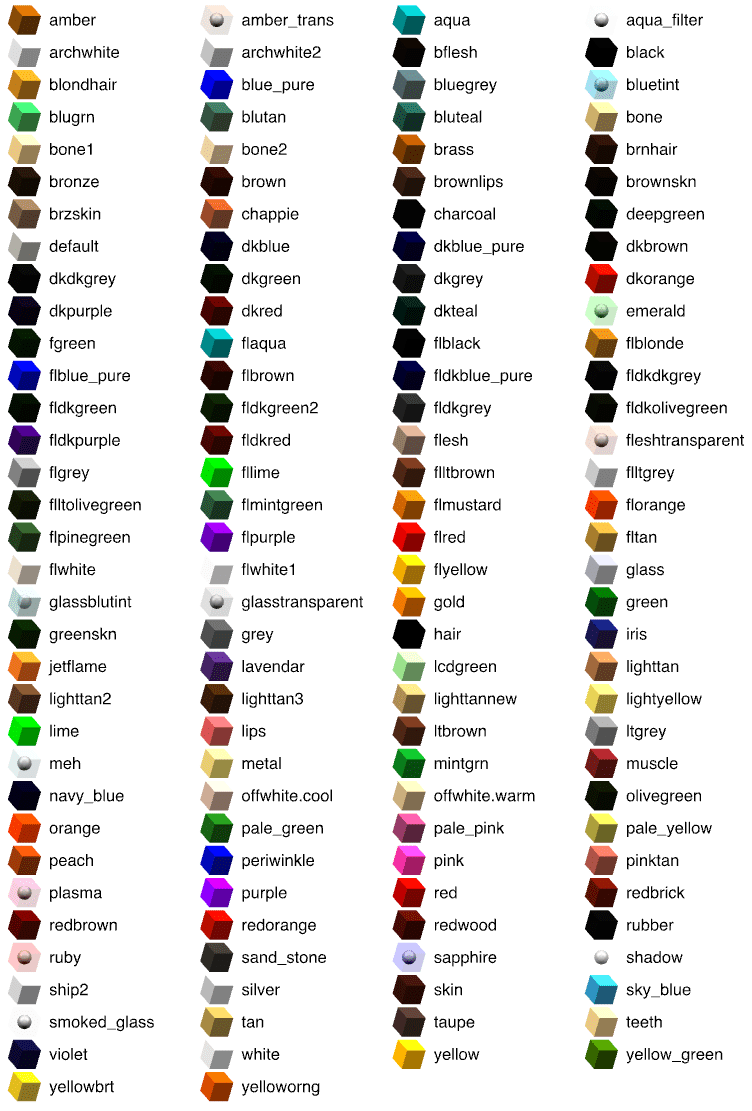
The OBJ file format is a text file format that is quite simple. From its description at Java 3D web site, this discussion and this one available on Sweet Home 3D forums, you may change the color of the different parts of an OBJ model by adding usemtl colorName
rows in the file, where colorName
is one of the color described in this document. From version 1.6, you may also describe model color and texures in a MTL file referenced by the OBJ file with a mtllib mtlfile statement.
During the Import furniture wizard, you may choose the category of an imported 3D model with an editable drop down list. Thus, if you want to add an imported model to a new category, type a new category name in the text field of this drop down list. If it doesn’t exist, it will be created.
You may use any program able to create or export 3D models in OBJ, DAE/Collada or 3DS format. Among the free programs, start with Art of Illusion if you never used any 3D modeling program, because it’s quite easy to learn and use. Blender is also a very popular program supported by a large community, but it’s much more difficult to learn. Both programs are able to export to OBJ format and run under Windows, macOS and Linux.
Whether they come from the default catalog or were imported, all the pieces of Furniture you use in a home are saved in the matching SH3D file. Thus you may transfer and open a SH3D file on any other computer even if it runs under an other operating system.
On the other side, the pieces imported in the catalog of Sweet Home 3D are saved in private folders separate from program one to avoid losing them during an upgrade of the program. If you want to transfer these pieces to the Sweet Home 3D catalog of an other computer, you may use ExportToSH3F-1.0.sh3p plug-in. Once you installed this plug-in, choose the new menu item Furniture > Export imported furniture to SH3F… to create a SH3F file and import it on the other computer with the Furniture > Import furniture library… menu item (caution, this plug-in doesn’t work with the Java Web Start version of Sweet Home 3D).
If required, you may edit a SH3F file with the downloadable Furniture Library Editor.
This is a problem due to the configuration of your graphic card. Please read the answer to the same question in the Installation section. If it doesn’t solve your problem, you may also try to import librairies of additional 3D models.
Other features
Sweet Home 3D supports the creation of ceilings seen from below, but doesn’t propose some simple way to create roofs yet. Nevertheless, you can use various tricks to cover a house: if the roof is flat, you can draw rooms in a level matching that roof.
If you want to add a sloping roof, you may assemble blue slate roof, red slate roof or polygonal roof 3D models available at the 3D models import page, as well as the ones available in 3D Models Contributions Tracking System like Krams036’s models and OK Hoff’s models. From the version 5.5, you may also assemble boxes and triangles of the Miscellaneous category that you’ll flatten and rotate around their horizontal axis, like in the house demos available in the dialog box shown by the File > New from demo menu item. Finally, the Roof Generator plug-in developed by Dorin Vatavu with the help of Daniele Lombardi is useful to create roofs with various slope angles.
From version 3.4, use the Plan > Levels > Add level menu item to create New levels, then choose Plan > Levels > Modify level to adjust its elevation, height and other attributes.
You may create round walls either with the Wall creation tool tool, or afterwards with the wall modification pane or with a drag-and-drop of the indicator displayed at the half of a wall. If you want to draw a round wall during its creation, keep the ctrl key (alt key under macOS) pressed when you click a second time at the end point of a new wall; an arc of a circle joining the two ends of the new wall will appear, and you can modify the arc extent of the round wall by moving the mouse pointer, until you click a third time. The angle of this arc extent may be entered with the keyboard too, once you pressed the Enter key, or ctrl + Enter (alt + Enter under macOS) keys if you were already using keyboard mode to enter the length of the wall. To modify the arc extent of a wall afterwards, double-click on the wall and modify the value of the Arc extent field in its wall modification pane.
When magnestism is active, the opening side of a door or a window towards the interior or the exterior depends on the side of the wall where you drag and drop it. The location of the rotation axis of a door or a window towards the left or the right may be reversed by double clicking on it in the plan or the furniture list, then selecting the Mirrored shape option in the furniture modification pane.
In Aerial view mode, the observer can turn around his home in the 3D view to view it from various angles. By default, this rotation is centered on the middle of the bounding box which contains all the walls, rooms and furniture added to home, and this center is automatically updated at each modification. This behavior ensures the user always sees his home entirely with no way to get lost in the 3D view. If you want to move this center of rotation, enable the Aerial view centered on selection option in the preferences pane and select the object(s) in the plan around which the aerial view will turn, or use the Virtual visit mode which lets you choose any point of view. If you want to see some rooms hidden by walls in Aerial view mode, you may also set the walls transparency in the modification pane of 3D view.
Check the size you chose during the second step of the Import background image wizard. The entered value must match the size of the line drawn below in the real life, not its size at screen or on the paper you scanned. If the current unit is centimeter or inch, this value will be probably much larger than 100.
Check that you have the permissions to write in the folder where you want to save that file. If this is the case and your system is Windows, check also that its security settings don’t forbid you to save some files from Sweet Home 3D application, following these instructions. Under MacOS, ensure that Full Disk Access is granted to Sweet Home 3D in the Privacy tab of Security & Privacy panel of System Preferences.
When Sweet Home 3D saves a home, it attempts to create first a temporary file that replaces the previously saved file only once the temporary file is successfully created and if there’s enough disk space. This ensures that there’s very little chance that your previous SH3D file gets corrupted even if the last save operation failed. Nevertheless, some users still report they can’t open their SH3D file. If this is your case, try to open your SH3D file with Sweet Home 3D 4.4 and above, to check if the program can repair it. If it still can’t open your file, please try to describe to the developer of Sweet Home 3D the circumstances of the last save operation (was is successful?), whether the SH3D file was transferred or not by email, ftp or with an USB key, what happens when you try to open the file that causes problems, and join a compressed version of your SH3D file if possible.
Finally, try next time to back up regularly your SH3D files, like you should do for any document you spend hours on.
From version 4.4, you may import a SH3D file in the Online version or export a home from the Online version to a SH3D file to edit it with Sweet Home 3D installed version. Importing and exporting services are available only to the users who are registered and logged in.
Under Windows, installing Java and running Sweet Home 3D with DirectX generally solves this problem. Read also the answer to this question in the Installation section.
This is a problem due to the configuration of your graphic card that can’t create offscreen 3D images. Please read the answer to this question in the Installation section.
Depending on your graphic card, the 3D view may look too bright or too dark. You may adjust Light brightness in the pane displayed by choosing 3D view > Modify…. If you want a more photorealistic rendering of the 3D view, choose 3D view > Create photo… from the menu and select the best quality available in the displayed pane, after checking you use at least the version 3.0 of Sweet Home 3D.
In the photo creation pane, computing an image at the two best quality levels may take a few minutes, and in the video creation pane, computing the video may take many hours. To speed up the rendering process, try the following tips:
- increase the max memory allocated to Sweet Home 3D,
- create smaller images or videos, and/or compute them with a lower quality,
- turn off useless lights,
- use less detailed 3D models,
- use textures images with a lower resolution,
- use a computer with a more powerful CPU (running at a higher frequency and/or with more cores).
Note that the graphic card isn’t used at all to compute images at the two best quality levels, so using a better one won’t help. - choose Yafaray rendering engine in Renderer option,
You’ll find requested features at this page and in some discussions of Sweet Home 3D forums.
Contributions
You may contribute to Sweet Home 3D in many ways:
- Write an article about it on your blog, a forum or other means available on the Internet, for example to review it or to describe how you used it.
- Create some new 3D models and post them in 3D Models Contributions Tracking System, so they can be added to the Free 3D models page.
- If you have some skills in Java programming, develop a plug-in for Sweet Home 3D, after reading its plug-in developer’s guide.
- Write a tutorial about Sweet Home 3D in the language of your choice, or even create a video tutorial, like the ones described in the documentation page. If you have no means to host your document on the Web, it may be hosted on Sweet Home 3D site.
- Translate Sweet Home 3D in an other language.
- Answer user questions in Sweet Home 3D forum.
- Report a bug, propose a missing feature or write a review on SourceForge.net.
- Donate to Sweet Home 3D project.
Localizing Sweet Home 3D in a language consists of the translation of:
- texts in menus and dialogs (these texts are gathered in a big .properties files that looks like this one),
- help pages in HTML format (a good software should come with a decent help system),
- the six following web pages: home page, download, gallery, documentation, 3D models import and Online version comments. This may be achieved by one or more persons and should take at least four days of work.
Please, read the translation guide and/or write to the developer of Sweet Home 3D to receive more instructions about this process.